Snow & Ice Are Finally Melting — What to Check Around Your Pool Patio
After one of the colder, snowier winters we’ve had in recent years across Long Island, many homeowners are finally starting to see the snow and ice melt away. While that’s welcome news, the freeze-thaw cycles that come with long stretches of winter weather can sometimes take a toll on masonry surfaces, especially around pool patios where pavers, coping stones, and brick borders are constantly exposed to moisture.
As the ground begins to thaw, this is the perfect time to walk around your pool area and look for a few key signs that winter may have caused minor movement or damage. Catching these issues early helps prevent bigger repairs later in the season when pool areas become heavily used.
Check for Shifted or Uneven Pavers
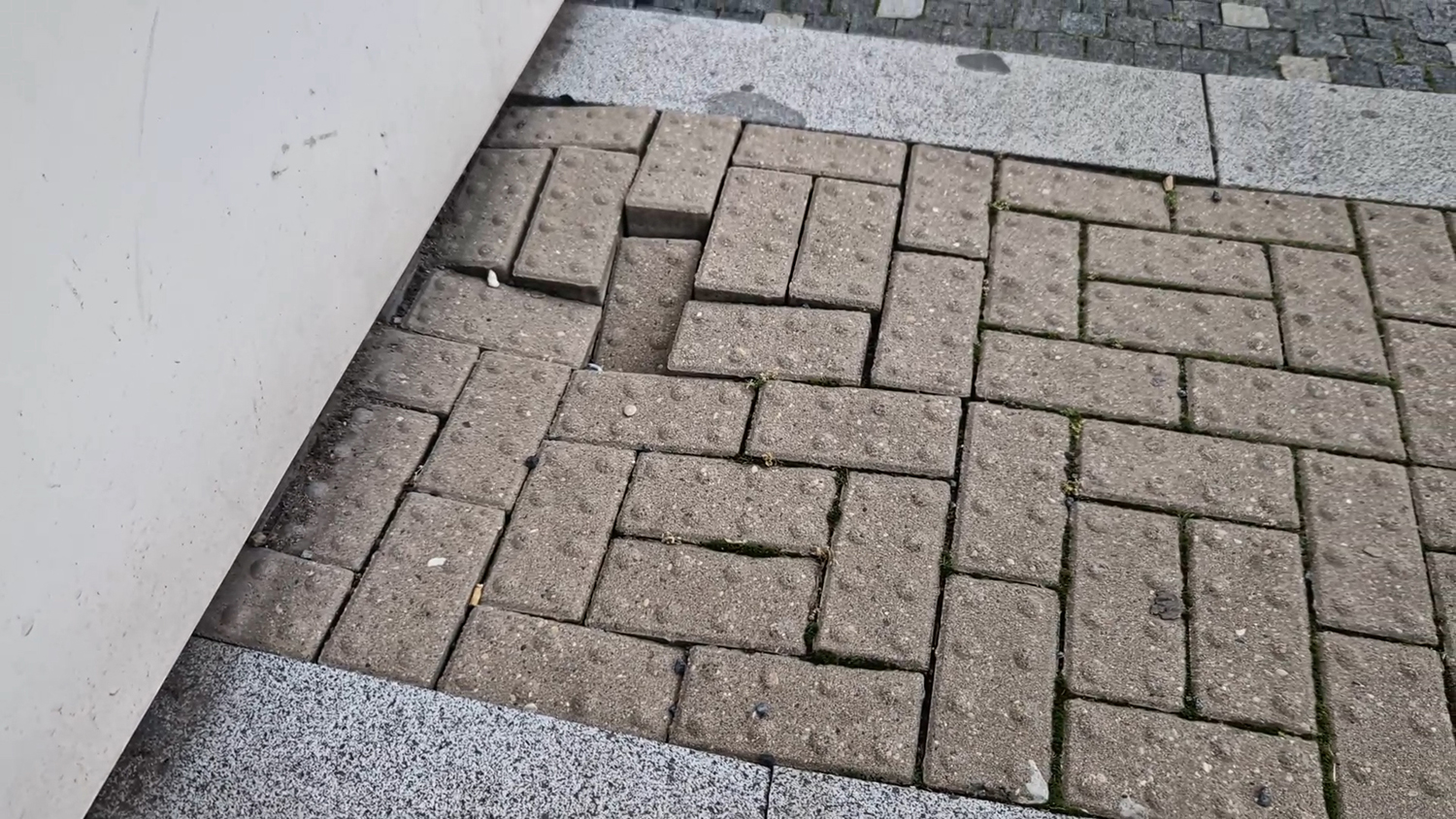
Freeze-thaw cycles cause moisture in the ground to expand and contract. When that happens repeatedly, it can push pavers slightly out of place.
Look for pavers that appear higher or lower than surrounding stones, areas where the patio surface feels uneven underfoot, and small gaps forming between stones. Even minor movement can worsen over time if not addressed, especially once heavy foot traffic returns during pool season.
Look for Cracked Bricks or Pool Coping
When water gets into small cracks and freezes, it expands and can cause brick or stone to crack.
Inspect pool coping stones, brick borders around patios, step edges, and any raised seating walls. Small cracks can often be repaired quickly if caught early before they spread or cause pieces to loosen.
Check for Loose Edges or Movement
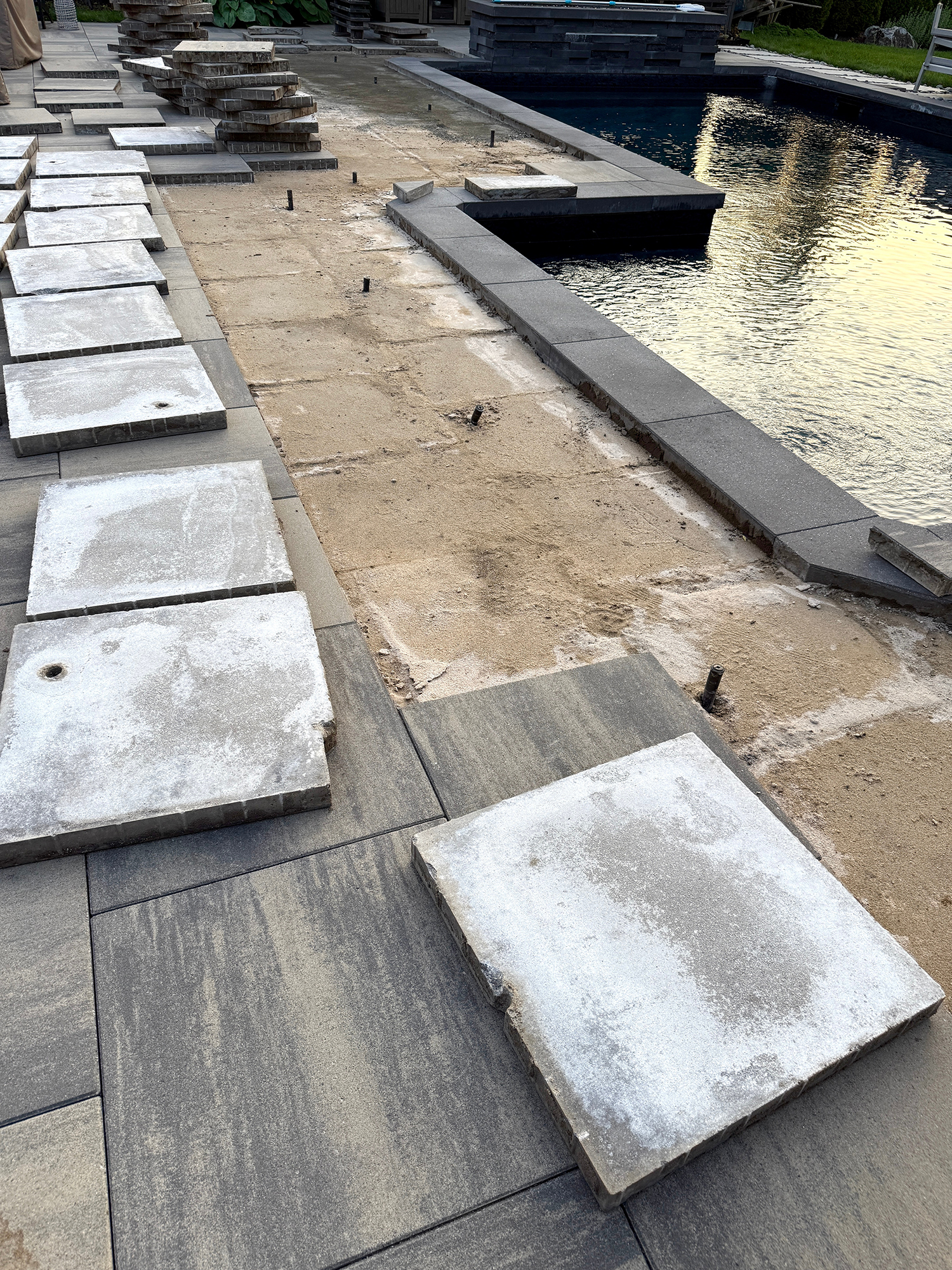
The perimeter of a pool patio often experiences the most movement because those areas are more exposed to runoff and ground movement.
Look for loose border pavers, edging stones that feel unstable, and areas where joint sand has washed out. Re-sanding and stabilizing these edges early can help prevent larger sections of the patio from shifting.
Watch for Drainage Issues
Melting snow and ice can reveal drainage problems that may not have been obvious before winter.
Signs to look for include standing water near the pool patio, water flowing toward the pool instead of away, and saturated areas near retaining walls or steps. Poor drainage can weaken the base beneath pavers and eventually lead to settling or movement.
Early Maintenance Prevents Bigger Repairs
Most winter-related masonry issues start small. Addressing them early in the season can help prevent more extensive repairs once summer arrives and pool areas see heavy use.
A quick inspection after snow melt can help ensure your pool patio, pavers, and brickwork remain safe, level, and ready for the warmer months ahead. At Top of the Line Landscaping, we always recommend checking masonry surfaces after winters like the one we’ve just experienced across Long Island. It’s one of the easiest ways to protect the beauty and longevity of your outdoor space.