Building a Pool Patio That Lasts: What Goes Into a Professional Paver Installation
When homeowners look at a finished pool patio, they see beautiful pavers, clean lines, and a space ready for summer memories. What they don't see is the work underneath that determines whether that patio will still look just as good ten years from now.
At Top of the Line Landscaping & Masonry, we've been building outdoor living spaces across Long Island since 1991. Through decades of experience, we've learned that long-lasting results are never accidental. Every successful project begins long before the first paver is installed.
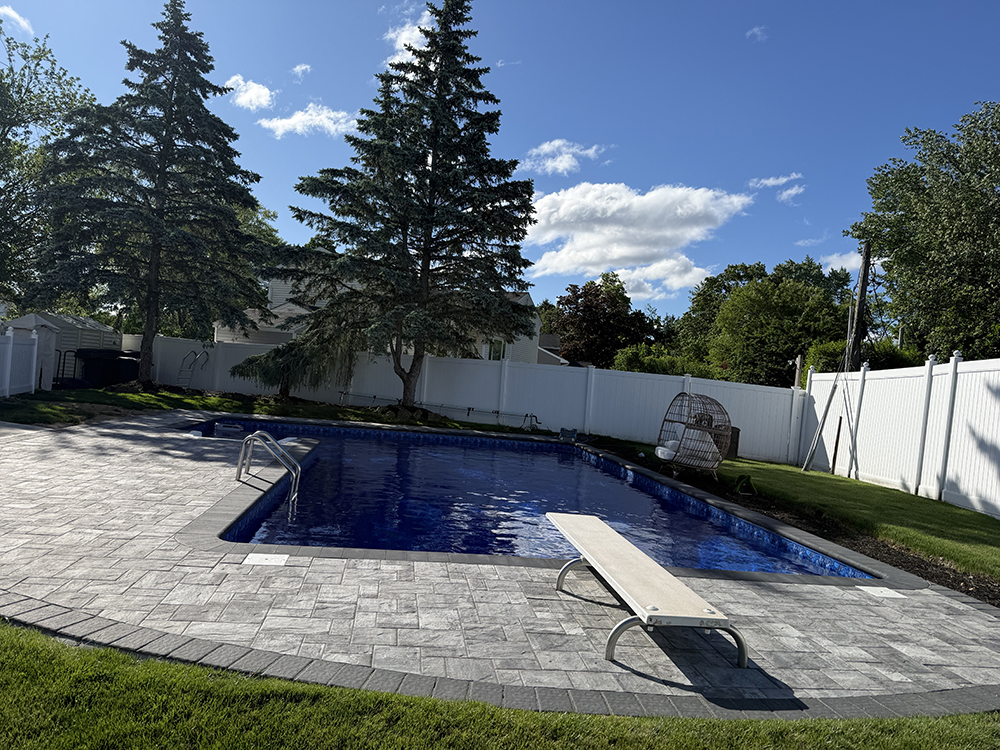
Our recent pool patio renovation in East Northport is a perfect example. While the finished project delivers the clean, modern appearance homeowners want, the true value lies in the preparation, engineering, and craftsmanship beneath the surface.
Step 1: Proper Excavation
Every durable paver installation begins with excavation.
Existing materials, unstable soil, roots, and organic matter must be removed to create a solid starting point. The area is excavated to a depth that accommodates the base material, bedding layer, pavers, and perimeter restraints.
Skipping or rushing this stage often leads to settling, uneven surfaces, and costly repairs in the future.
Step 2: Installing a Compacted Aggregate Base
Once excavation is complete, layers of crushed aggregate are installed and mechanically compacted.
This foundation serves as the backbone of the entire patio system. Each layer is compacted to create a dense, stable base capable of handling years of foot traffic, changing weather conditions, and Long Island's freeze-thaw cycles.
A properly constructed base also promotes drainage, helping prevent water-related issues that can compromise the installation over time.
Step 3: Establishing Drainage and Locking in the Perimeter
One of the most important steps in any pool patio project is creating a secure perimeter.
Before the main field of pavers is installed, final grades and elevations are established to ensure proper drainage throughout the space. Water must be directed away from the patio while maintaining a surface that feels comfortable and level to those using it.
At the same time, concrete edge restraints are installed around the perimeter of the project. These restraints create a rigid framework that prevents the paver system from spreading or shifting over time.
The border pavers and edge courses are secured into this concrete foundation, creating a permanent structure that locks the entire installation together.
Step 4: Installing Coping and Border Pavers
With the perimeter established, the pool coping and border pavers are installed.
These elements do more than create a finished appearance. They establish the exact layout and dimensions of the patio while providing additional structural integrity around the pool itself.
Because these pieces are secured and locked into the perimeter system, they help maintain the stability and appearance of the patio for years to come.
Step 5: Installing the Main Paver Field
Once the framework is complete, the remaining pavers are installed within the established borders.
Every paver is carefully placed to maintain proper spacing, alignment, and visual consistency. Around a pool, attention to detail becomes even more important because every line, curve, and transition remains visible from multiple angles.
The result is a patio that feels seamless, balanced, and professionally finished.
Step 6: Joint Stabilization and Final Compaction
After installation, joint material is swept into the spaces between the pavers to help lock the system together.
The patio is then compacted and finished, creating a unified surface designed to resist movement, discourage weed growth, and withstand years of use.
This final step transforms thousands of individual pavers into a single integrated hardscape system.
The Difference Is What You Don't See
When visitors arrive at this East Northport pool patio, they'll notice the beautiful pavers, clean borders, and inviting outdoor space. What they won't see is the excavation, compacted base, concrete edge restraints, drainage planning, and structural preparation beneath it all.
That's what separates a patio that looks good today from one that still looks great years from now.
At Top of the Line Landscaping & Masonry, we believe quality starts below the surface. Every project is built with the same attention to detail, from the first bucket of excavation to the final paver installation. Because when the foundation is done correctly, the results speak for themselves for years to come.